

Clinical research studies cannot be performed without study participants who volunteer to be involved. The ARLG appreciates the time and commitment of these participants who play a significant role in advancing medical science. The ARLG is committed to providing lay summaries of results, which describe what researchers learned from the study in a language and format that is understandable and easy to read. In addition to the results, the summary includes information about why the research is needed, the purpose of the research, when the study was conducted, who was involved, what happened during the study, and how patients and researchers can use the results.
SUMMARIES


RAPid IDentification and Susceptibility testing for Gram Negative bacteremia (RAPIDS-GN)
Gram-negative bacteria are a problem worldwide because they cause up to 33% of bloodstream infections. If these infections are not properly treated they can lead to death.
In order to treat bloodstream infections, doctors need to know what type of bacteria is causing the infection. This information helps doctors prescribe the right antibiotic to kill the bacteria. Time is important because the sooner the correct antibiotic is given, the faster the patient will get better and the infection will be cured.
Results from standard testing typically take two to four days. Results from rapid testing can be available in hours.
This study was conducted to learn if doctors could prescribe the correct antibiotic faster when a rapid-testing device was used instead of standard testing.
Read the RAPIDS-GN Study Summary of Results
Master Protocol - Gonorrhea and Chlamydia testing of Extragenital Specimens
The purpose of this study was to look at how well three different tests would work to diagnose gonorrhea and chlamydia in the throat and the rectum. These tests are currently approved to diagnose gonorrhea and chlamydia in the urinary and genital tracts.
The study tested samples from the throat and rectum on the three tests with the results being positive, negative, unclear, or no result. Researchers compared the results across tests to determine whether people were infected and the accuracy of the tests in detecting gonorrhea and chlamydia.
Read the MASTER-GC Study Summary of Results
SUMMARIES

Prospective Observational Evaluation of the Association between Initial Vancomycin Exposure and Failure Rates among Adult Hospitalized Patients with MRSA Bloodstream Infections (PROVIDE) Study
Vancomycin is the most commonly administered antibiotic in hospitalized patients. It is used to treat patients infected with methicillin-resistant Staphylococcus aureus (MRSA), but the optimal dosing remains uncertain. In this study, researchers evaluated the relationship between vancomycin administered over time (exposure) and outcomes in patients with MRSA bacteremia.
The purpose of this study was to determine the best dose of vancomycin to treat MRSA blood infections in hospitalized adults.
Read the PROVIDE Study Summary of Results
SUMMARIES
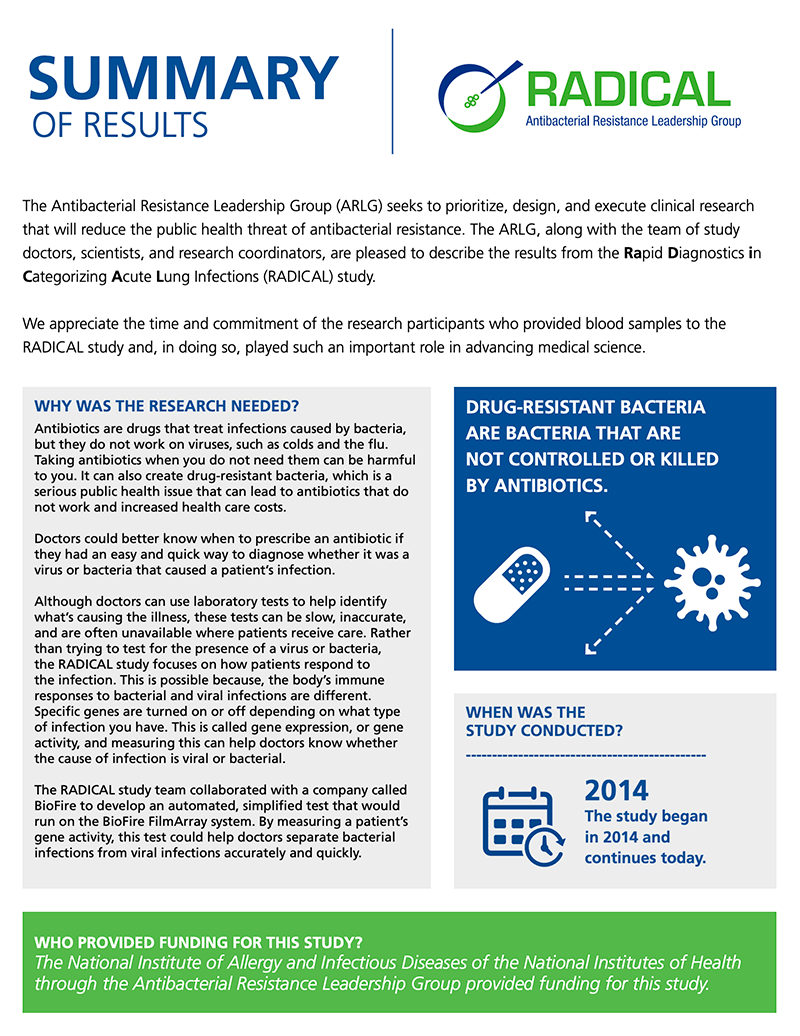
Rapid Diagnostics in Categorizing Acute Lung Infections (RADICAL) Study
Antibiotics are drugs that treat infections caused by bacteria, but they do not work on viruses, such as colds and the flu. Taking antibiotics when you do not need them can be harmful to you. It can also create drug-resistant bacteria, which is a serious public health issue that can lead to antibiotics that do not work and increased health care costs.
Doctors could better know when to prescribe an antibiotic if they had an easy and quick way to diagnose whether it was a virus or bacteria that caused a patient’s infection. Rather than trying to test for the presence of a virus or bacteria, the RADICAL study focuses on how patients respond to the infection.
Read the RADICAL Study Summary of Results

Phase I Study to Evaluate the Pharmacokinetics, Safety, and Tolerability of Two Dosing Regimens of Oral Fosfomycin Tromethamine in Healthy Adult Participants (PROOF)
Fosfomycin is approved for the treatment of urinary tract infections and cystitis, which is inflammation of the bladder.
The most recommended adult dose is three grams taken orally (by mouth) every other day, for a total of three doses. However, there are many different dosing regimens prescribed today that have not been studied or approved. In addition, based on activity observed in the lab, doctors are interested in prescribing this drug for its ability to treat infections caused by antibiotic-resistant bacteria (bacteria that are not controlled or killed by antibiotics). However, the drug has not been approved for this indication.
This study gathered information to help doctors identify alternative dosing regimens.